
In our culture, the ability to remember things is frequently praised as the peak of cognitive ability. From a young age, we learn the importance of cherishing our memories and to carefully nurture them. Nevertheless, I would like to challenge this conventional knowledge and contend that, as my grandfather and grandaunt have shown, forgetfulness can actually be a source of release and rebirth, especially when Alzheimer’s disease is present.

First of all, forgetting frees people from the restrictions imposed by their past. Both happy and bad memories affect our daily decisions and help to define who we are. In contrast, for those living with Alzheimer’s disease, the emotional baggage that comes with memories can be unbearable. Once a self-assured and self-sufficient man, my grandfather’s anxiety and depression increased as he thought about his past mistakes and losses. As an owner of his own business, my grandfather was the victim of gun violence, an incident from which he has not recovered. He, nowadays, spends most of his days locked up within the house, I believe, due to his repressed trauma. He didn’t have a renewed sense of freedom from the load of his past until he began to forget. His forgetfulness was also brought on by his heavy drinking in his earlier years. He is protected from having to suffer through the grief of losing a child (my mother), of losing his wife (my maternal grandmother who died before I was born) and of focusing on that he has also lost himself.
Furthermore, forgetting permits the resuscitation of ties and relationships. On the other hand, it provides an opportunity for them and their relatives to establish a new kind of relationship. Although my grandaunt developed symptoms of Alzheimer’s disease in her early 70s, she always showered me with love whenever we spent time together. We were free to make new memories in the here and now, free from the expectations and criticisms that stemmed from our common history.
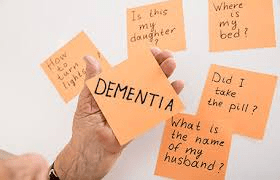
Therefore, in spite of the common opinion that we should always remember and never forget, it’s necessary also to mention positive aspects of forgetting especially for people with Alzheimer’s disease. Renewing connections, releasing people from the shackles of the past, and encouraging imagination and creativity are all made possible by forgetting. We can change the way we think about memory loss and help people with Alzheimer’s disease by accepting forgetfulness as a source of rebirth and freedom.


 Sylvia Wynter's Dream
Leave a comment