/ˌmedəˈmôrfəsəs/
a change of the form or nature of a thing or person into a completely different one.

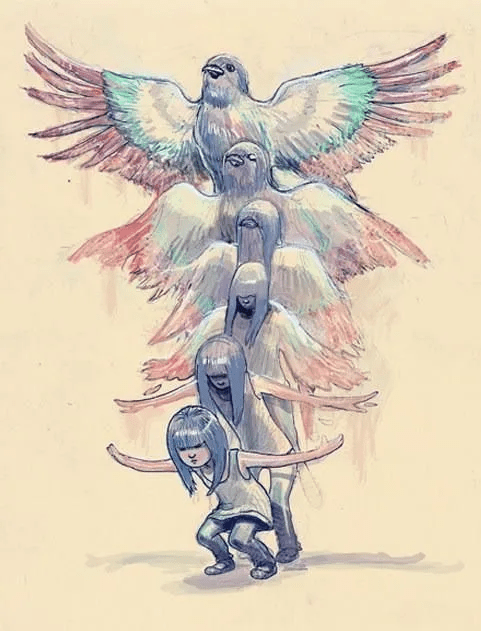
Artists often speak about going on ‘creative fasts’ when they’ve encountered a block in their creativity. Musicians completely stop listening to music for weeks to months on end, to essentially purge their minds of the memories of melodies. Many artistes mention the difficulty in their creative processes, where they begin humming and strumming a beautiful melody, only to realise that it was a melody they’d heard before, not one they’d just created.
Forgetting the complexity of what they’d learnt in art school, painters often go back to the basics. Re-learning from the beginning, simplistic sketching and careful brush strokes, re-discovering what they’d already discovered.
Caribbean researchers must first forget what they’d been told about herbal remedies, to finally see the vastness of use in them. Yes, periwinkle tea helps with blood sugar problems, but recently, Caribbean researchers were able to unveil its cancer-fighting properties.
Looking outside the scope of what was already known, to find a remedy that went undiscovered for years before, is what the act of forgetting permits us. It creates a silence in the mind that can only be filled with new ideas, and the freedom to view things with fresh eyes. This is how new recipes, new remedies, new conconctions and new successes arise. When someone messes up the formula of a mix, something new inevitably forms, and in this new thing we are able to find use and benefit. This is the way that early alchemists discovered ways to heal ailments with what they had in nature. Mixing and matching, forgetting what this plant over there was used for primarily, in the hopes that there is another use to be discovered.
And something new and magical is created. One of time’s oldest tales.


 Sylvia Wynter's Dream
Leave a comment