Amnesia, a disorder that is frequently linked to memory loss and forgetfulness, has effects that extend well beyond the person who has it. The story of a person’s personal and cultural past disappears along with their memories. The loss of historical and personal memory that results from amnesia injures a family or a community, creating a hole that is hard to fill across generations. As a student who is passionate about history and my Caribbean heritage, I shall explore the significant implications of amnesia on coming generations in this blog post, with particular attention to how it affects my own family and the larger Caribbean community.
We can learn more about how history shapes the present and future by examining the difficulties younger generations encounter in reassembling their legacy and comprehending who they are. Amnesia permanently impacted the shared memory of my family. When I was younger, I used to listen to my grandfather’s and grandaunt’s, stories with wide eyes, fascinated by the intricate web of our family’s past. However, as they became older, the stories that had previously bonded us started to disappear along with their memories. It appeared as though a piece of our family’s history was disappearing, leaving an unfillable hole.
One of the main impacts on my generation’s sense of self is the loss of personal and historical memory. The narratives that previously linked us with our ancestors are lacking in our lives today. We get lost and desire purpose while longing to belong. The urge is intense and gives one a feeling that they want what was almost in but is now beyond their grasps.
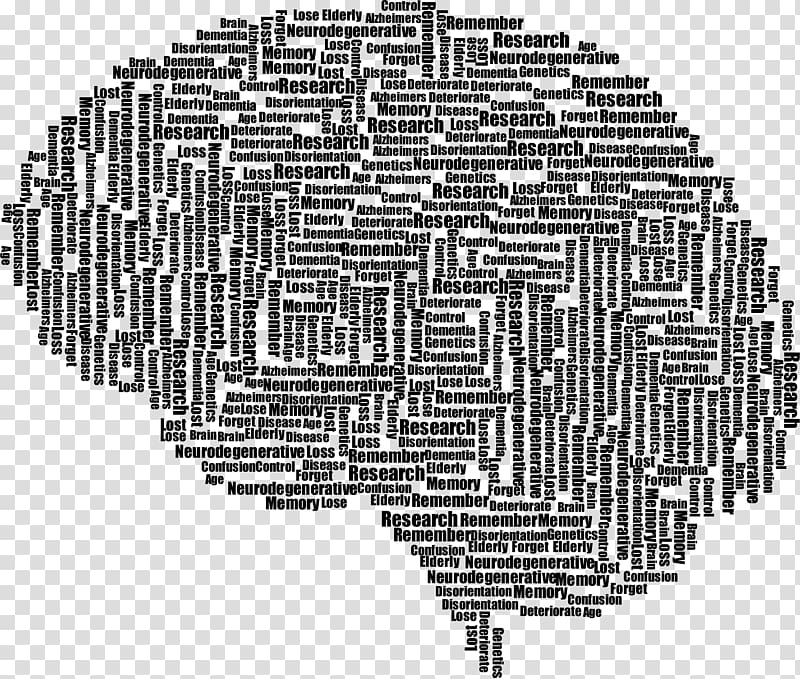
A key element of protecting our legacy is the passing down of family or cultural narratives. By bridging the gap between generations, these stories help us appreciate our heritage and gain insight from the experiences of our forebears, however, amnesia and to a greater extent dementia, has destroyed this bridge, and the memories that formerly united us are lost forever. We are forced to piece together bits of information and rely on outside sources to fill in the blanks while we attempt to cross the complexity of our heritage on our own.
Rebuilding our past in the context of amnesia is daunting. We must admit to ourselves that much of our past has been taken away from us for life, and we need to think of alternative ways it can be remembered. Therefore, with no firsthand stories, it is upon us to do what we can in recognizing and preserving our history despite this enormous responsibility. We then use historical records, cultural materials as well as the stories told to us by others within our society.
Our emotions are at their peak as we start our journey of rediscovery. People feel a sense of lost memories, and there is sadness in the air. Nevertheless, there is also the strength and determination in us – we will not let memory decide what we stand for. In spite of difficulties, we keep remembering our ancestors’ merits and preserve their legacy.
Amnesia causes harm that reaches far into our lives. Memory loss has a profound impact on the Caribbean people, with a rich cultural tapestry and a vast history. Our common stories, which have influenced our region’s identity, run the risk of being lost to time. The stories that have been passed down through the centuries about resiliency, resistance and victory might disappear, leaving the next generation adrift in an uncharted territory. Amnesia has been a tragic result of colonization, slavery and forced migration in the Caribbean. Although these injuries were severe, I think it is also quite difficult for those who are trying to find their origin and themselves. We have no link to our history; therefore, we experience a feeling of displacement and a broken concept of who we are. Furthermore, our awareness of our role in the world becomes hazy as the stories of our ancestors’ suffering and victories fade into hazy bits of information.
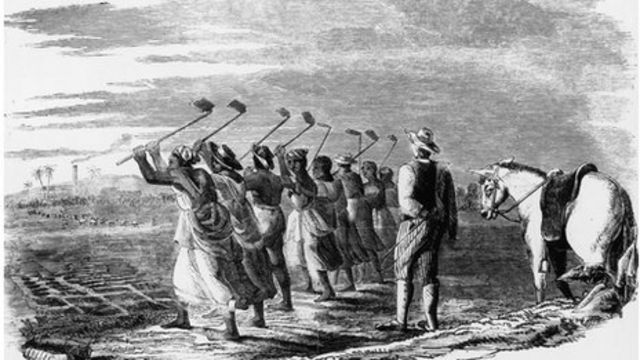
Picture displaying slavery, our shared Caribbean history.
One of the biggest obstacles for people recreating our ancestry is the lack of tangible evidence. Loss of memory is simply one aspect of amnesia; another is the destruction of tangible reminders of one’s past. It is impossible to retrieve all of these family trees, ancestral pictures, and letters that provide some insight into historical living. It hurts because it keeps us from having physical contact with our birthplace. Additionally, this prevents us from understanding the struggles, successes, and survival of their ancestors. All over the world, as well as inside my family and the Caribbean community, topics of memory, inheritance, and the influence of the past on the present and future are relevant. Amnesia is an important reminder of the value of protecting our shared memory, appreciating our past, and transferring our stories to coming generations. It is like a wake-up call upon us to preserve what is left of our cultural history.
Our youth today more than any other time feel compelled to study our history so as to make sure our ancestors’ stories remain in us for our future generation. Therefore, amnesia holds great long-term implications for the next generation. Within families and communities, the younger generations’ path of recreating their heritage, their ability to pass down family or cultural narratives, and their perception of identity are all impacted by the loss of historical and personal memory. Despite the enormous obstacles encountered, people overcome them with fortitude, tenacity, and a strong sense of accountability. We are reminded of the need of maintaining our shared recollections and appreciating our traditions when we think about the broader topics of memory, inheritance, and history, only then can we develop a present and future from the knowledge and experience of our ancestors.
Information provided from this source:
https://www.academia.edu/5603054/Memory_Museums_and_the_Making_of_Meaning_A_Caribbean_Perspective


 Sylvia Wynter's Dream
Leave a reply to Xavier Thomas Cancel reply