Intro to Me:
I once held the office of Clan Bard for a group of Maroons interested in the revival of the Mayan roots of their religious and cultural institutions. This role, though primarily shamanic in nature, was one of invention and creativity as much as it was a spiritual one. Because so much had been lost to Spanish and English aggression, the root archetypes and substructure of the lost practices had to be examined and analyzed and in many cases reinvented for our purposes. Holes had to be filled and paved over, sometimes with modern psychological and post-structural tools, literary theory, philosophy of religion and comparative mythology.
The most important lesson I learned from this experience was that when excavating matters of the spirit, no two persons ever completely agree. There will be those who become excited by the prospect of new vistas and opportunities for freedom through ingenuity. And there will be those who cling to the old, to tradition, like a lifeline. And even those who pragmatically and lovingly believe in a healthy compromise between these modes of apprehension will be treated as enemies when the time comes to finalize decisions that impact a culture’s trajectory. Strength, in the end, wins out to logic or ultimate well-being. Coercion bedevils cooperation, even when (or especially when) the stakes are relatively low.
Having fallen in love with the exploratory side of what public intellectual and psychedelic enthusiast Terrence McKenna called Noetic Archaeology, I grew weary of the infighting and politics required of me. I began to despise the tendency of tribal societies to prefer isolation to engagement and the prideful declarations of a self-anointed in-group to the vastness of abstract and metaphorical space.
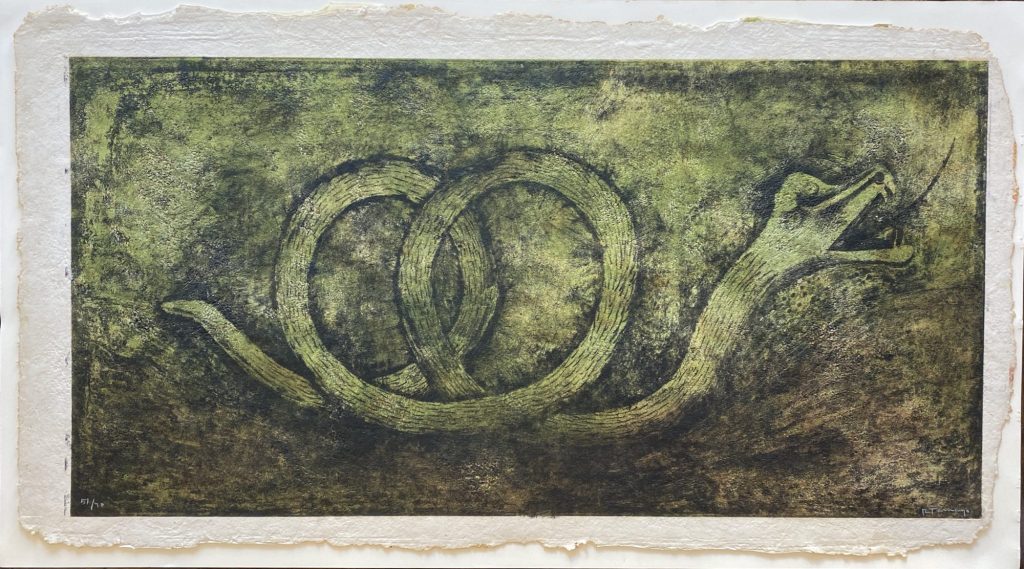
I spoke to the spirits I’d befriended, the grand serpent Quezalcoatl and a handful of representatives from my varied bloodline’s traditions, and with their support, I retired and decided to finish my degree which I’d been putting off for about ten years.
WHEN BABYLON FALLS…
A Response to Amy E. Earhart’s Can Information Be Unfettered? Race and the New Digital Humanities Canon
On the question of “the democratization of knowledge”, what are the appropriate frames of analysis? If, by admission, the canonical Marxist, Feminist, anti-Racist and Gender-theory frames have not yielded the desired result (a leveling egalitarianism of academia based on a bedrock of zeroes and ones, branching out into wider society), what would?
First, the structural: are centers of power and wealth as static as they seem? Though the five hundred year old hegemony of the “West” remains, for the time being, in its longstanding position of dominance, movements of economy, military and philosophy are now in the process of diversifying and scattering this centrality.
Through the expansion of the NATO alliance of western nations into eastern Europe in the post-Soviet years, the United States has begun its late imperial process of over-extension. By toppling the democratically elected Ukrainian government of Viktor Yanukovych (Maidan Coup, CIA op 2014), which was followed by a civil war in the eastern Ukrainian province of Donbas in which 15,000+ Russian speakers were killed by the NATO-backed ultra-nationalist Ukrainian military, the Russian Federation began a careful and long-term strategy of retaliation that has since expanded into two larger conflicts: a hot war between the Russian and Ukrainian states, and an all out economic war between the Western Alliance, and a new Eastern bloc championed by the BRICS nations and their allies, which at time of writing constitute a global majority.
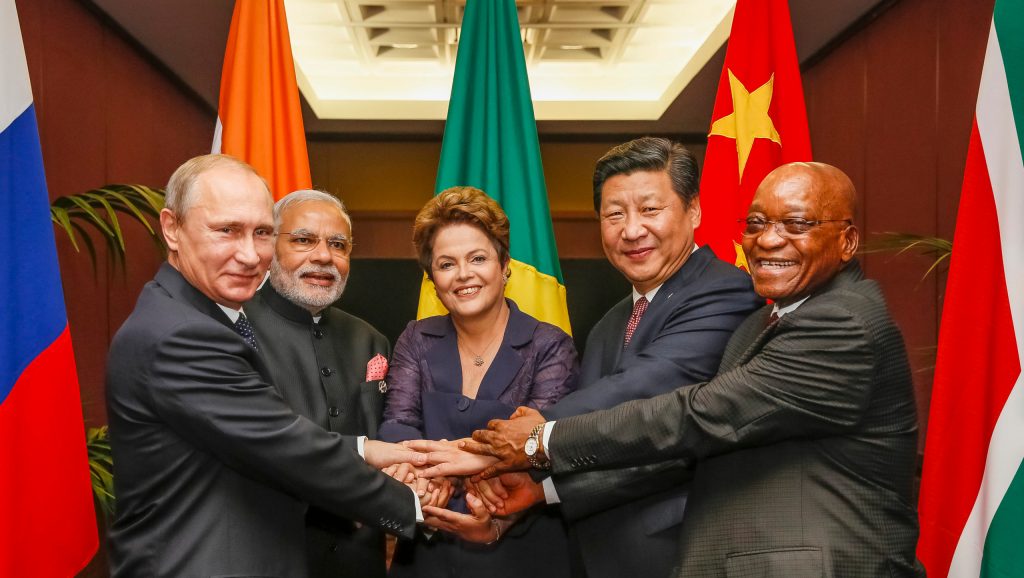
With the recent inclusion of Saudi Arabia, the United Arab Emirates, Egypt, Ethiopia and Argentina in the BRICS alliance, the petro-dollar, which has served as the backbone of US hegemony, has been called into question. And Russian military technological advancement has NATO terrified of direct confrontation with boots on the ground in Eastern Europe. They don’t believe they would win.
Though still early in this inter-civilization confrontation, the rise of developing nations such as China, India, Brazil and South Africa opens new doors to glistening intellectual horizons. Unlike in the Cold War which was fought between the Soviet Union and the United States, the new rival BRICS nations have a larger collective GDP than the Western Bloc, whereas the Soviet Union was never truly an economic contender for the throne. The centers of power have suddenly, as if overnight, become decentralized in an unexpected way. The long-awaited multi-polar world has, objectively, arrived.
Academia, in its predictable sluggishness, is still operating under a malaise of old thinking and older incentives: race, class and gender (in their current de-fanged and corporate-backed power blocs) may no longer constitute the appropriate lens of assault upon institutions of oppression. The war has emerged from covert back rooms. The turtle-necked post-modern critique, which began as a nihilistic, bourgeois distraction and has since evolved into an intelligence-backed psy-op, has been unmasked by a multitude of serious leftist thinkers from Varoufakis to Chomsky.
The war against the western hegemony has become, once again, as Trotsky willed it: international.
While these frames will, for the foreseeable future, be appropriate modes of questioning while traipsing through the heart of Empire, the time seems right to expand the analysis to include geopolitical strategizing with an emphasis on hard realism, statistical analysis, economics and new philosophy of a much more broad and open variety.
The redundancy of American-centric argumentation has never been so apparent. Russia and China between them have told the Emperor he is naked, and now the whole world awaits the admission of embarrassment and bares witness to the pride before the fall.
Should the West lose its client nations’ dependency, the potential for real development becomes an option. The debt burden forced upon Africa, the Caribbean, South East Asia, some Arab nations, and South America through the US controlled IMF and World Bank could finally be thwarted in their schemes, if not outright defeated. Neocolonialism and the cultural hangovers of centuries of occupation-colonialism could finally be destroyed. No longer would poor nations pay for the privilege of US treasury debt to facilitate greater and greater military spending and bottomless dollar printing for the United States.
In such a world, where the United States and European Nations are peers and not patrons, racial hierarchy would, in time, become less of a theme. As a byproduct of the success of Black majority nations, and not as a consequence of minority criticism which has never inspired more than grudging incremental appeasement.
Black people would not be a minority in need of special protections in a developed Sahel. Nigerian film and a pan-African cinema funded by a united Africa could upstage Hollywood and birth new heroes for emulation for generations of future Black youth. Gender norms would vary more by geography than by political faction two decades into a truly multi-polar world. Different nations would experiment across time with different solutions to questions of unequal outcomes amongst populations. Imagine: Socialism with Jamaican Characteristics.
This new frontier must be fought for. Almost certainly, new CIA psy-ops and interventions are being designed as we speak. Imagine if Marxist academia could agree on a new and coordinated mode of cooperation in the face of the inevitable imperialist onslaught? Imagine if new theories of cooperation, beyond the mere hope of a nascent internet, could be designed and worked out in this very classroom?
The digital media space, though over-saturated with content from a handful of apps, is not without its freedoms and potential for subversion. The internet, properly understood, does not have to remain capitalist in its incentive structures. Nor do the authoritarian alternatives that already exist, with their backs up to Western Capital, have to serve as templates for new revolutions.
Not when Babylon falls…
Post Script:

My skepticism towards the ability of decentralized and purely bottom-up or grassroots initiatives to effectively challenge authoritarian structures without succumbing to more powerful incentives (whether capital, governmental or human nature) is based on my experiences attempting such projects. I am always sympathetic to the tendency of idealists to attempt to launch such initiatives, and am heartened every time they do appear. Just as I am heartbroken whenever I witness them being bought out, burnt out, corrupted or co-opted.
And whatever the pattern of their failure says about human nature, their constant reemergence in new shapes and faces and narratives and stratagems everywhere and at every time across the world and history, seems to say the precise opposite of that tendency to conformity and enslavement. The human desire to create and communicate information unfettered by controlling interests is a drive and personality just as eternal as its shadow.
As my teacher, Professor Fredrick Hickling once told me, reality is neither linear, nor is it a sequence of cycles. It is Helical. Just as Jung laid out in his work Aeon, and Yeats presented in his Hermetic wanderings in the text, A Vision. Progress always arrives in a round about and idiosyncratic way. Never exactly as planned. And each culture apprehends this tendency with a different prejudice. Some with fear. Some with faith and expectation.
I remain, somewhere in the middle, with an ever open eye and a patient, if tired, love in my heart.


3 responses to “Mp: Jeremy G”
-
It’s giving Poli Sci class. Love that.
LikeLike
-
I tried to keep it on track re: humanities, but the ground is shifting so radically underneath us that rethinking the frame seems important… You tell me though, was it hard to follow? Or irrelevant to the conversation where humanities is concerned?
Thanks for the reply btw
LikeLike
-
Oh no, it was good. Some of the references to certain people or events were out of left field but some cursory google searches made me follow. Maybe try hyperlinks ¯\_(ツ)_/¯
LikeLike
-
-


 Sylvia Wynter's Dream
Leave a reply to Ki Thompson Cancel reply