Who Am I? What is the Digital Humanities?
Who Am I?
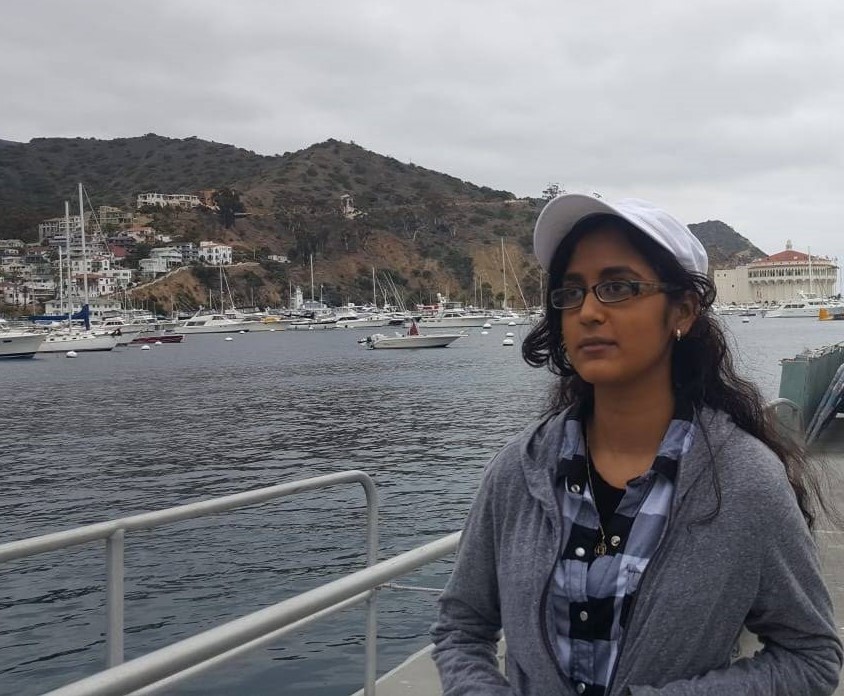
I am pursuing a Bachelor of Arts degree in Literatures in English. My favourite literature genre is prose. I love reading fiction and I have a hobby of creative writing including short stories and poetry. I am also interested in psychology.
I selected this course, not only because it completes my 3rd-year requirement to graduate and complete my B.A. degree but also because it evoked an interest in a new expression of scholarship through creative digital writing.
My first impression of this course was that its novelty created a daunting yet anticipatory excitement of learning about the digital humanities. I hope that the skills I learn from this course will allow me to better navigate the digital sphere and enable me to apply my knowledge through my research on the exploration of the Jamaican voice and the discussion on whether or not it is real or imaginary.
What is the Digital Humanities?
My response to Matthew K. Gold’s, Introduction: The Digital Humanities Moment
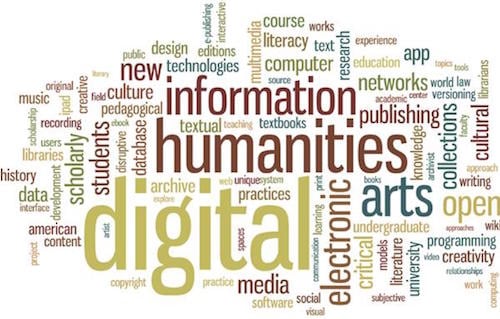
“… this volume is but the beginning of a new set of conversations.”
Matthew K. Gold, Introduction: The Digital Humanities Moment
The volume introduces aspects of the digital humanities community, also referred to as DH, discussing the meaning behind its existence as well as its positive and negative uses and influences. As stated by Pannapacker, the DH is first described by the Chronicle in 2009 as “the next big thing,” and later again in 2011 as just “the Thing.” This emphasized the evolution of the digital humanities that affected and created possibilities for those outside the initial community.
The 4Humanities group also stated in (“Mission”) that the digital humanities are “making creative use of digital technology to advance humanities research and teaching.” This leads to the mention of conflict that emerges in the DH community between those who use digital tools to aid traditional scholarly projects while others use it as a disruptive tool with the intention to change aspects of academic practice.
These instances lead to the question of what it means to be a “digital humanist”. This is reflected throughout the volume.
Thus, Ramsay’s definition, though may seem like gatekeeping, is apt. His definition evolves from a rigid thought of only those who code are considered digital humanities, to a more inclusive definition that has moved from “reading and critiquing” to “building and making,” suggesting that only those who are able to create something are considered to be digital humanists.
The DH is further emphasized for its dynamic use by making mention of the communication of digital humanists on social media such as Twitter. Additionally, the Institute for the Future of the Book created a WordPress blog, CommentPress, where manuscripts are published and peers are encouraged to review and comment. The project was effective and endorsed a productive environment.

The volume presents a comprehensive introduction to the digital humanities, its purpose and its effects. Through its discussion, the DH is presented as a platform which changed and impacted the academic community by introducing new modes of learning, sharing, presenting, expanding and preserving knowledge digitally.
In addition, the volume highlights the conflicting intentions experienced in a platform that is to aid in the sharing of knowledge. This reflects the idea that even the noblest of causes may lead to chaos through ill intent. Therefore, it is a necessity to continuously reflect and explore the meaning of what is a digital humanist. Knowing one’s role and one’s purpose makes it easier for an individual to assimilate into society.
The success of the hybrid peer-to-peer semi-public review is a project that demands recognition for its effectiveness. There are many individuals who prefer to communicate among like-minded peers rather than among the wider public. This project proves that it not only created a comfortable space for communication but was also an effective tool for production in encouraging others to review and comment on the manuscripts.
I think this volume achieved its aim of presenting an introduction to the digital humanities as it included its history, its evolution, its positive influences and difficulties as well as its successful projects, evoking an interest to learn more about its platform.

My primary interest in the volume lies in the peer-to-peer review semi-public hybrid project created by the Institute for the Future of the Book. The WordPress blog, CommentPress made manuscripts available for like-minded peers who are not comfortable with a fully public setting to comfortably communicate, review and critique the essays. The environment also created pressure for the reviewers to review and critique the manuscripts, since their peers were doing the same.
The blog also allowed the reviewers to mention their peer’s work in their own work and enabled a healthy environment of giving and receiving criticism. This exchange of information through communication effectively increased productivity.
However, my main focus is on the psychology of the individuals in that environment. It is a popular concept that many individuals are more comfortable with the idea of anonymity especially when communicating among a large group of people. Expression through speech and actions is easier to do when there is no fear of being judged and critiqued, especially when among like-minded peers rather than in a public space of individuals from varied fields of study.
Similarly in the project, it is expressed that although there are manuscripts open to the public, there are some that are semi-public and require a password that only like-minded peers will have access to. The inclusivity on the platform stems from sharing a common interest, allowing for more communication and resulting in producing a positive effect.
Anonymity or semi-anonymity in this case and the sense of belonging have a better impact on concentrated groups and this mode of information sharing is one that can be implemented in other fields of study. This is also an interesting research project to attempt in gathering information from marginalized members of the Indian community in order to share their voice, how they have retained their culture and whether or not it was successful.


 Sylvia Wynter's Dream
Leave a reply to thelastkontrarian Cancel reply