
Greetings Cyber Sapiens

My name is Kandice Thompson. I am a Literatures in English major, Film Studies minor at the University of the West Indies. On this day, in the year of our Lord 2022 this course, Creative Non-Fiction and Digital Media, felt like a necessity for a humanities student. In this techno-social era, navigating cyberspace and digital media, branding yourself and digitizing your work seems vital to success as the world of traditional print media dwindles. I registered for this course hoping to refine my social media game and become a bit more tech-savvy. The creative aspect in the title gives an air of freedom, freedom to explore and express maybe?
I am heavily invested in West Indian literature due to this ever-growing awareness of how distinctly my Jamaican upbringing has shaped me and informs my perspective on creative and academic pursuits. So, I want to learn how to do market literature and produce a project – something “tangible”… or something that exists to say hey, these are the skills that I’ve acquired with this major that most people can’t find immediate value in. I am talented I promise!
Reframing History Podcast
With that introduction, it follows that the article “Laurie Taylor and Cultivating Caribbean Knowledge” spoke to me. The article is a transcript of a podcast interview conducted by Julian Chambliss with Laurie Taylor about her work as the Digital Scholarship Director of the Digital Library of the Caribbean (dLOC).
The interview opens with Laura Taylor’s own definition of Digital Humanities
Digitization is getting at digital form [and] Digital Humanities is what you do with it. The humanities have always been about [the] social, cultural, and a bigger world. How do we have a better world? And there’s always the political and social impact of our work. And so, digital humanities work, I would also say, is digital scholarship, which is also public scholarship. It’s how we are public intellectuals in the digital age.
(Taylor, Laurie Taylor and Cultivating Caribbean Knowledge)
They go on to discuss the Digital Humanities in the Caribbean context and how the dLOC is helping to facilitate the preservation and support the production of digital humanities projects on a wide scale and having it be accessible to the Caribbean community. At its root, it is ‘tool-based work’, you build something and use it, Chambliss sums up by saying it is about “applying digital techniques to a humanities’ problems”. He positions the dLOC sit in the middle of this space as it is “both a tool that people use, but it also increasingly is a space where new knowledge is being created”.
The dLOC’s work has helped to enlarge the canonical understanding and complexity of Caribbean literature with archival efforts going back to pre-independence and Windrush in the English-speaking Caribbean. Its undertaking of the work to digitize the literature to preserve our history serve as an act of self-governance and self-determination. The act of writing and sharing our stories and histories from within, centering the people, instead of positioning us against or under colonial narratives as a way of carving out space and strengthening cultural identity.
Chambliss touches on the role of the librarian and libraries as being integral to the success of the digital humanities and the issues of underfunding and lack of resources that come with it. But also support from small cohorts, longevity of the work and its impact along with hopes for community outreach efforts within the Caribbean and the diaspora. We hear about dLOC’s contributions in the academic space from the top down; tertiary through to K12 and how it is essentially a digital humanities project itself
dLOC is effectively a multi-unit, global-South-centric digital project that has been sustained since 2004.
(Chambliss, Laurie Taylor and Cultivating Caribbean Knowledge)
that “bridges core responsibilities of a library as a repository, as a place of scholarly communication [and] scholarly community” as what it means to be an academic and producing the projects and working collaboratively and defying stereotypes of the isolated humanities scholar/creator.
My Thoughts

I will say I felt thrust into the world of digital humanities and left with a lot of questions, some the thought-provoking kind you’d expect from a Lit student but mostly basic ones that highlighted my gap of knowledge in relation to this discipline. What is the work really? Am I overthinking it? Is it just as simple as stories and projects being catalogued on the net? What are the huge scale digital humanities projects that appear in Slate magazine? What is distance reading, data visualization, liberatory infrastructure, minimal computing?
It is certainly not a read for the uninitiated. Though the minimal computing quelled my fears in terms of allowing for accessibility. It was comforting to read because it sounds like it offers a soft entry point into this world where the technological applications seem to be intimidating and overwhelming.
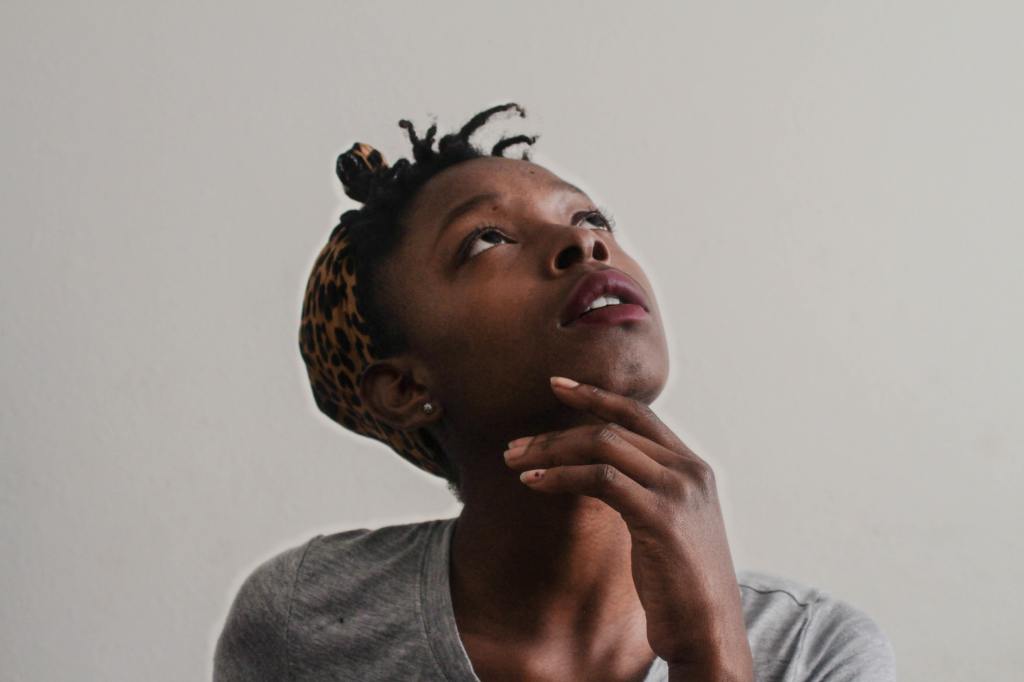
Slate magazine? Data visualization? Minimal Computing?
Discovering ACURIL, I found that their mission resonated with me and had me considering the Maya Angelou quote “you can’t really know where you’re going until you know where you have been” in relation to my focus on Afrofuturism. It was surprising (but shouldn’t have been) to read that our Caribbean literary canon was considered to begin with Windrush. I know we have oral history that refutes that, but a con of the tradition is how much is lost through time as so much was never recorded. If I’m considering Afrofuturism to be a imagining a Black future “future void of white supremacist thought” then I must consider our past in its totality (however ambitious) to have a less muddied view into my crystal ball so to speak.
Where Are We Going?
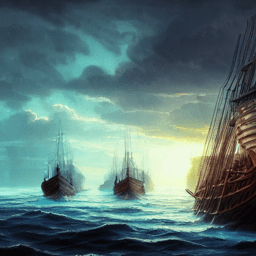
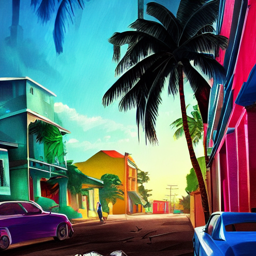

In my head, I’m looking back to African origins, thinking of what if’s but in a way, skipping over the Middle Passage and risking missing some of the intricate and obscured ways those two points of historic engagement impact present day Jamaicans, our culture and thought and ultimately how we look toward the future.
This will frame how I examine the work that is already out there that may align with my own ideas of Afrofuturism or push back against it. Maybe I am too idealistic, and my vision is too limiting or farfetched. I know now the dLOC is a valuable resource for research. I also walked away feeling validated with my chosen area of focus, knowing that there is some merit there, that digitizing the process and the project is important and valuable and there is space for me and a place for my work.
Works Cited
Chambliss, Julian. “Laurie Taylor and Cultivating Caribbean Knowledge.” Reframing Digital Humanities Conversations with Digital Humanists, Michigan State University Libraries, 3 Mar. 2021, https://openbooks.lib.msu.edu/reframingdh/chapter/laurie-taylor-and-cultivating-caribbean-knowledge/.
Crumpton, Taylor. “Afrofuturism Has Always Looked Forward.” Architectural Digest, Architectural Digest, 24 Aug. 2020, https://www.architecturaldigest.com/story/what-is-afrofuturism.
“Middle Passage.” Encyclopædia Britannica, Encyclopædia Britannica, Inc., https://www.britannica.com/topic/Middle-Passage-slave-trade.


 Sylvia Wynter's Dream
Leave a comment