
Saint Lucians’ linguistic identity manifests in the two languages we use to express ourselves and their convergence at the core of our being. After the Anglo-Franco wars for Saint Lucia, the island was ultimately under British rule from 1815 until independence in 1979.
The official language of Saint Lucia is English, but it informally shares the spotlight with Kwéyòl. As a result, Saint Lucia occupies a unique space in the region as a member of the anglophone and francophone Caribbean.
Despite the ability to express ourselves in two languages, the presence of English has caused a level of amnesia that Saint Lucians do not realise.
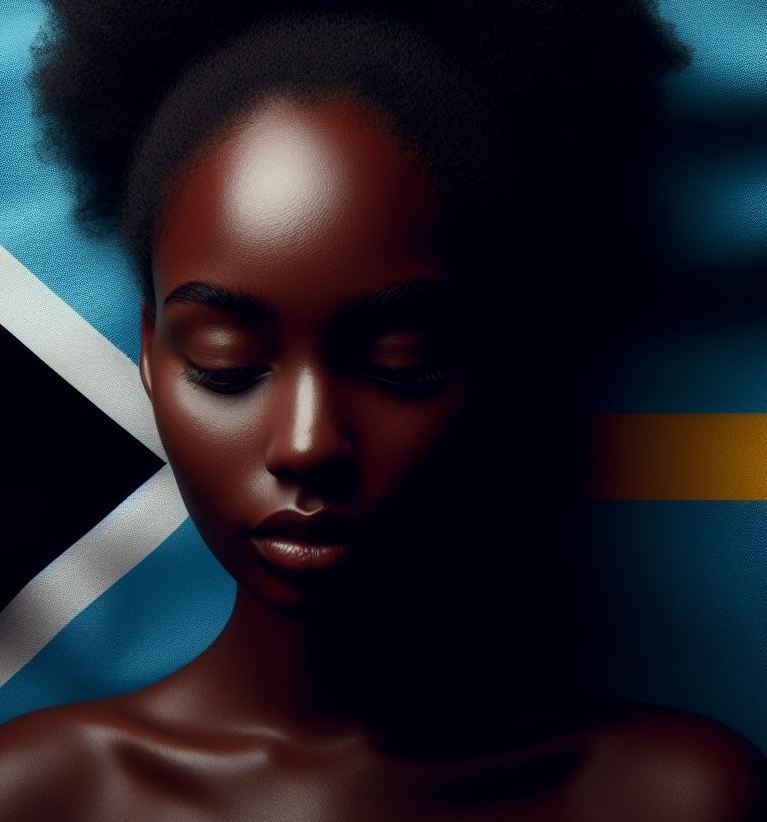
The forked tongue of bilingualism comes with a vicious sting when its duality begins diverging from its stem of unity. The clash between the gendered English and the nongendered Kwéyòl has resulted in a level of amnesia that is harmful to certain members of the Saint Lucian public.
Kwéyòl, as a gender-neutral language, is inclusive to persons who do not ascribe to the gender binary. This fact, however, is not widely recognised by many persons due to their intolerance of non-binary people, which can only be a result of the influence of English.
“The instance of discrimination was by a Saint Lucian. They referred to my pronouns as “alien”, saying that a person can only be male or female, not neither or both.”
Anonymous nonbinary saint lucian
While speaking Kwéyòl, Saint Lucians express no qualms about the pronoun ‘i’ (which means he/she/it) when referring to anyone but have difficulty grasping the concept of nongendered pronouns when speaking English.
A Saint Lucian considering gender-neutral pronouns as ‘alien’ is ironic because, in Kwéyòl, a person is not referred to by their gender. The pronoun ‘i’ is ambiguous, and meaning can only be inferred based on the context of the conversation.
Even so, the pronoun’s ambivalence makes it so that when speaking Kwéyòl, we occupy an indefinite space where we are male, female, neither and all simultaneously. Therefore, the pronoun ‘i’ is a marker of personhood that is undefined by grammatical gender and, most importantly, removed from the gender binary.
“They [parents] didn’t react badly, but they also haven’t really been receptive to it.”
Anonymous nonbinary saint lucian
There is an apparent disconnect between how we perceive pronouns in English and Kwéyòl. One half of our tongue embraces and articulates gender neutrality, while the other attempts to reinforce the gender binary. This suggests an unreleased desire to keep the converging parts of our bilingualism separate.
This desire for distinction opts for a socially acceptable level of divergence to ensure seamless dualism. Any aspiration to adopt gender neutrality in English leads to instances of cognitive dissonance and discomfort.
“I never told my family, but I know they would react either angrily or dismissively.”
Anonymous nonbinary saint lucian
This resistance appears to originate from the unrealised existence of gender-neutral pronouns that already exist in Kwéyòl. In one instance, nonbinary people are discriminated against by fellow Saint Lucians in English, and in the other, their non-gendered identity is affirmed when speaking Kwéyòl.
The inability to reconcile these two differing linguistic expressions is a paradox that arises from the divergence and convergence of bilingualism’s forked tongue. It is only through the remembering of our inherited gender-neutral West African syntax that we will be able to fully understand that the gender binary is a construct that was imposed on our African ancestors, which they rejected. Still, we continue the colonial mission of imposing it onto ourselves.
Nonbinary musings
“One thing I would like people to know about my existence being non-binary is that sometimes you question yourself, whether that be your appearance or, in my case, if I should start using she/her again or switch to he/him.”
“I would like people to know that it’s okay to be confused by my gender and identity, but it’s not okay to disrespect me because of it.”
Source:
Anonymous Nonbinary Saint Lucians. Personal Interview, 1 Dec 2023.
 Sylvia Wynter's Dream
Leave a comment