INTRODUCING……..
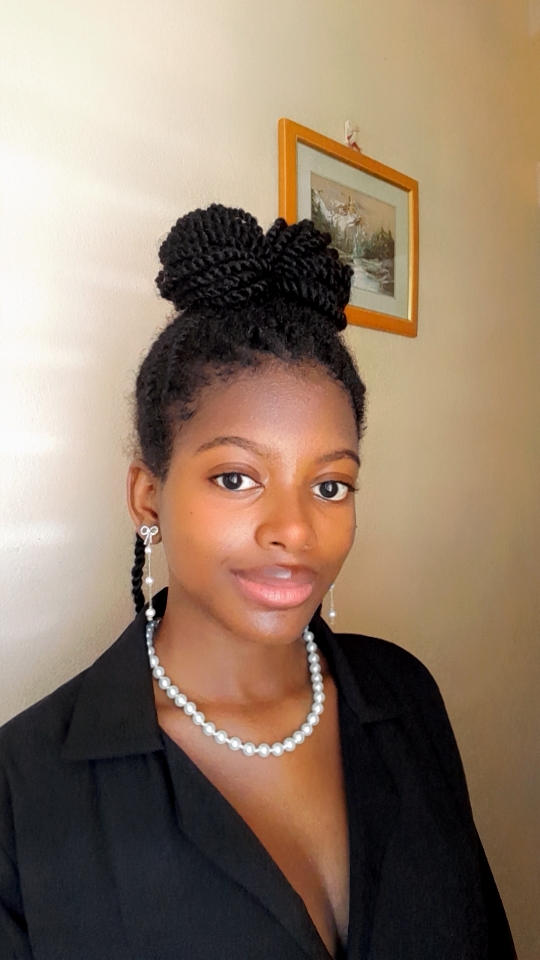
Hello, readers! I am Brittney Bent, an Integrated Marketing Communication major. My courses are predominantly media and communication based. Hence, I consider myself to already be a digital humanities student. I chose to do this course, Creative Nonfiction Writing and Digital Media, because of my love for writing. Although I love to write, this course will be different from what I am used to. My writing revolves around mystical beings, times, and worlds. However, this course is centred around writing about reality, something that I have not practiced much. I hope to improve my nonfiction writing skills in this course, as well as learn how to produce content on a digital platform. I am thrilled to be apart of this class and I hope you will follow me on my digital humanities journey. I have interesting projects coming up, which includes me investigating how social media affects memory. Come aboard and be filled with knowledge!
Who is a Digital Humanist?
As a media and communication student, I considered myself to be a digital humanist. However, after reading an article by Matthew Gold, I became confused about the meaning of digital humanities. This article, entitled ‘The Digital Humanities Moment’ delves into the rising popularity and significance of digital humanities, as well as the conflicting opinions of scholars on who a digital humanist is.
At a 2011 Modern Language Association convention, scholars became engaged in a debate which was incited by scholar, Stephen Ramsay. “What does it mean to be a Digital Humanist?” was the question. The debate was stirred when Ramsay listed basic criteria that a digital humanist should have. He stated that a digital humanist must be able to code! “Do you have to know how to code [to be a digital humanist]? I’m a tenured professor of digital humanities and I say ‘yes.’ …Personally, I think Digital Humanities is about building things…. If you are not making anything, you are not …a digital humanist” (Ramsay, “Who’s In and Who’s Out”, Gold, 2012). The response to his argument led to him subsequently posting a blog, in which he relaxed his view about the coding. However, he was still adamant that digital humanists must be able to build (Gold,2012).
As someone that is new to digital humanities, I believe that coding does not have to be a basic component of being a digital humanist because the field is very diverse. However, I do believe that coding would be a great asset for digital humanists to have. Digital humanities applies computer based technologies to the humanities field (Berry, 2019). People may think that technology equals coding, however it does not. In 2023, the rise of AI generated systems is apparent. Creators no longer need to code or pay others to code for them. This can be done using an AI generated system.
Additionally, some aspects of digital humanities do not require coding. Creating podcasts, content and blogging may not require coding for digital humanists. Unless the digital humanist is creating the website, coding is not a necessity. Websites like WIX and WordPress can be used by creators to publish their content.
One aspect of Ramsay’s view that I agree with, is the notion that a digital humanist builds. Digital Humanities is about expressing humanities in a digital format. It requires the humanist to add to or build on a digital space. In essence, all digital humanists are creators.
Digital Humanities is for everyone! Let’s not gatekeep!
Bibliography
Berry,D. (2019). What are the Digital Humanities? The British Academy.
https://www.thebritishacademy.ac.uk/blog/what-are-digital-humanities/
Gold,M. (2012). The Digital Humanities Moment. dhdebates.gc.cuny.edu. https://dhdebates.gc.cuny.edu/read/untitled-88c11800-9446-469b-a3be- 3fdb36bfbd1e/section/fcd2121c-0507-441b-8a01-dc35b8baeec6#intro
Vallath by Dr.Kalyani Vallath. (2020, May 18). Cultural Studies terms: Digital Humanities New Area In Research in English Departments [Video]. YouTube.
 Sylvia Wynter's Dream
Leave a comment