jAyda pitter
WRITER. MUSICIAN. ARTIST.
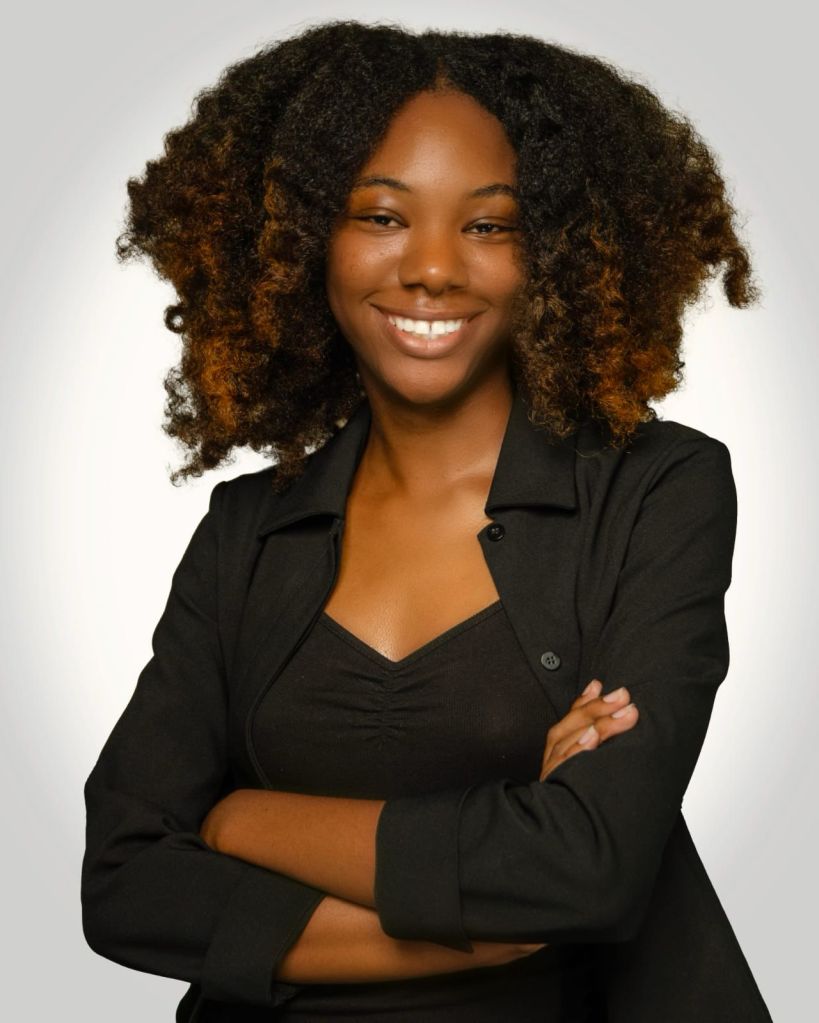
A curious mind with interests across artistic disciplines, who is always searching for an opportunity to tell stories.
The next few months as a part of this creative non-fiction for digital media course as a creative writing minor, for me, is an opportunity to expand my writing beyond fiction and beyond paper to the digital present and future.
Digital Humanities: Conversations with digital humanists
Laurie Taylor and cultivating Caribbean knowledge
Julian Chambliss’ interview with Laurie Taylor for his podcast ‘Reframing History’, transcription made available through Michigan State University library, is a discussion about digital humanities and more specifically the Digital Library of the Caribbean (dloc), a Caribbean resource for the digital humanities.
Digital Humanities for those acquainted, like these two, seems to be an elusive concept but for those of us new to the concept like myself, one of the simplest ways to approach it is as given by the University of Sydney Library (2023) as follows:
“An interdisciplinary set of fields that are primarily concerned with using digital technologies, sources and methods as part of research in the humanities.”(para. 1)
However, like all things, the deeper into the concept you get, the more complex the definition becomes.
Dr. Laurie Taylor’s defintion:
excerpt from “Laurie Taylor and cultivating Caribbean knowledge“
Dr. Taylor is the Digital Scholarship Director of the Digital library of the Caribbean (dloc). Dloc’s original purpose as given by Taylor was for the preservation of and access to older Caribbean texts, however since its conception in 2004 it has grown to become a space that also generates material as members engage.
This digital humanities project has developed as a vehicle for social change through access to information. More Caribbean stories are being told and misconceptions about our history have been debunked as the dloc gained access to pre-independence Caribbean literature, changing the understanding of Caribbean literature.

“ACURIL, The Association of Caribbean University Research and Institutional Libraries, was formed [going],…”We’re fighting against colonization. We will not be ruled by these queens and kings and outsiders. So, we want self-governance, self-determination, and liberation for our people, which means we need to have access to the people’s information. We need to share the culture of our people in the world. We need to have control of our destiny. And that means that we need libraries.” And then, from ACURIL, dLOC is, “Okay, how do we do this in the digital age for sharing our information, for building us?””
— laurie taylor, digital director, dloc
My introduction to dloc was during my first year of university when I wrote an essay about the benefits of digitization on education systems in the Caribbean. The understanding I had of dloc was of it being a website that gave the user access to digitized copies of Caribbean texts. This interview with Dr. Taylor has opened my eyes to how much of an important collaborative tool dloc is, though a lot of its evolution is hard for me to grasp as someone outside of the process, unfamiliar with librarianship.
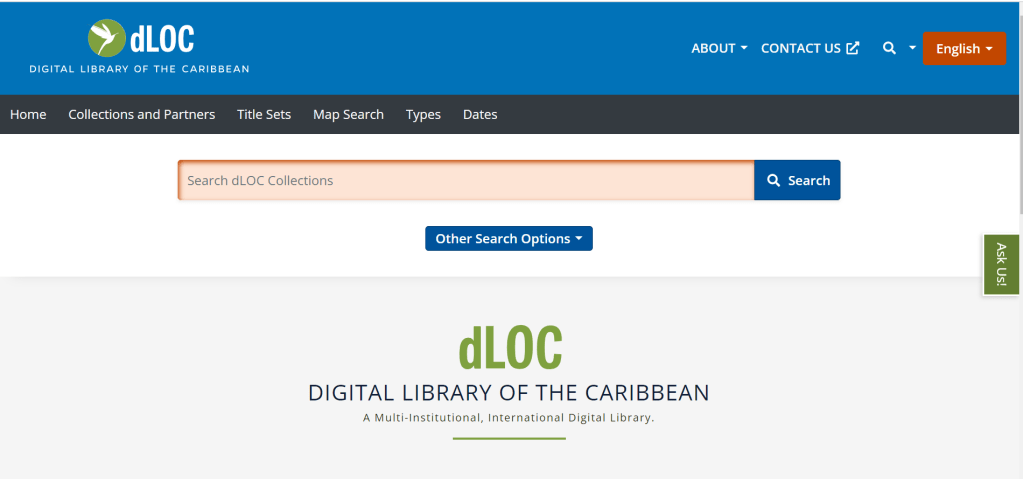
However I can easily recognise physical evolutions like the relaunched website with a new newspaper portal, video and audio file transcriptions and many more features that enhance usability.
By entering the digital humanities space through this course and partaking in research, I will inevitably interact with digital humanities tools. Those of us with more Caribbean centered research topics may find a great resource in dloc.
ACCESS THE NEW DLOC WEBSITE HERE —> https://dloc.com/
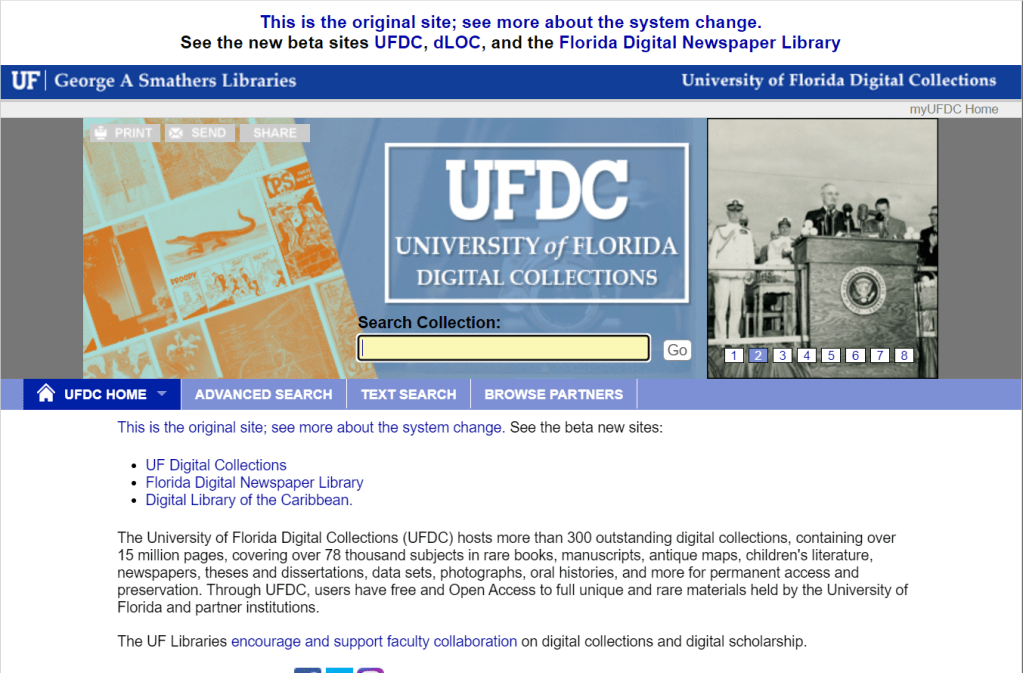
The old dloc website
The new dloc website
REFERENCE
What are the ‘digital humanities’? – digital humanities – (2023). Subject guides at university of sydney https://libguides.library.usyd.edu.au/Digital_Humanities

 Sylvia Wynter's Dream
Leave a comment