FIVE QUESTIONS WITH UWI
MY INTRODUCTION
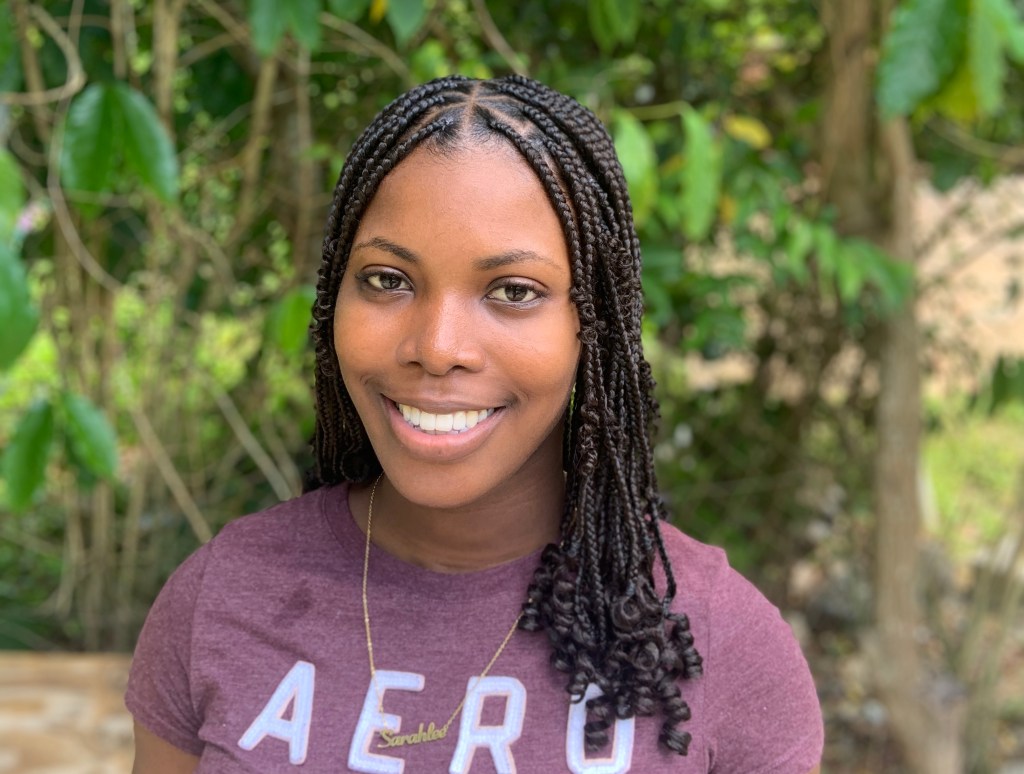
Hi! My name is Sarahlee Francis. I am a third-year Writing, Literature, and Publishing major student. I like cooking, baking, doing braids, and being a part of drama clubs, mostly “Roots” plays. I chose this course because it is a part of my major’s course outline that ensures I have completed all my courses to graduate. I hope to collect all that I can in this course to apply the knowledge wherever it is needed. It is very important to transfer knowledge. However, my primary goal is to obtain the necessary information (all of course) to pass with a good grade (specifically an A).
Article Selected- Laurie Taylor and Cultivating Caribbean Knowledge
The article that I summarized is a recorded interview by Julian Chambliss. The interview began with the interviewee, Laurie Taylor, giving her definition of digital humanities. She defined it as, “I like some of the easier definitions of Digital Humanities. Digitization is getting at digital form and Digital Humanities is what you do with it. The humanities have always been about the social, cultural, and a bigger world. How do we have a better world? And there’s always the political and social impact of our work. And so, digital humanities work, I would also say, is digital scholarship, which is also public scholarship. It’s how we are public intellectuals in the digital age.” Dr. Taylor starts by saying she is giving a simple definition; however, the definition can be a bit confusing for people who are not already informed about digital humanities and the entire process. In a simpler form, digital humanities are the process of using information collected from data that is converted into a digital form.
Chambliss moved on to ask about dLOC, Digital Library of the Caribbean. DLOC began in 2004, and compared to most digital projects, it has cemented its place in the industry because of the years it has been established. DLOC came from ACURIL, the Association of Caribbean University Research and Institutional Libraries. Librarians were all for dLOC because it was much cheaper to supply due to all the content and information contributed and shared to the project. The video below gives you a clearer insight into the dLOC and all that it is about.
Chambliss expressed that not only a platform that Caribbean institutions and people use but also a place where they can assess and learn information. Taylor added to this that the vision of the project was not only to give people in the Caribbean access to the platform but to include everyone in the Caribbean diaspora since it is by far a larger audience. The dLOC was designed to protect and preserve information about the Caribbean. Caribbean people can now own their work and leave an impact that generations to come can see it. It also serves as a way of controlling the narrative of Caribbean people and what they want to give, not the idea of somebody else telling their stories. Caribbean people can share their literature, history, and tales. He also explained how libraries play a role in digital humanities and the burden it bares because of the demand of recourses academia pupils seek to carry out research. It is an expensive process having to subscribe to different outlets when gathering information for research.
The conversation ended with an evaluation of how the academic job market is decreasing and what it takes to get Caribbean people into areas that will get Caribbean text and history across the world.
References
CNI: Coalition for Networked Information. (2022, July 13). Revitalizing the Digital Library of the Caribbean (dLOC) at Age 18. https://youtu.be/6wb5BFZPjsw
Chambliss, J. Reframing Digital Humanities: Conversations with Digital Humanists. Creative Commons Attribution 4.0 International License. https://openbooks.lib.msu.edu/reframingdh/chapter/laurie-taylor-and-cultivating-caribbean-knowledge/


 Sylvia Wynter's Dream
Leave a comment