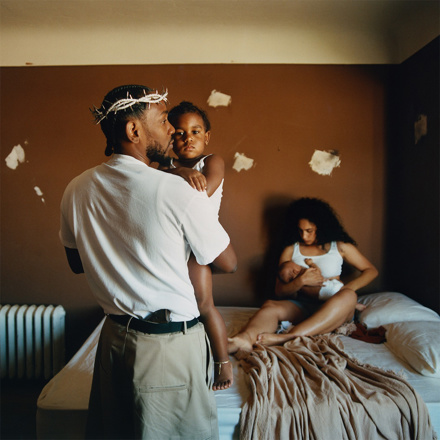
Fatherhood in the realm of the rap game.
written by Dominic Ramsay
Unquestionably, when the year 2022 approaches its end, and yearly reviews and retrospectives on the media produced this year begin rolling in, Kendrick Lamar’s name will certainly be repeated by the tongues of every music critic worth their salt when speaking about Album Of The Year. The creative focus for Lamar’s new album; Mr. Morale and The Big Steppers, was to be introspective and have Lamar address his personal struggles and challenges in a sort of ‘public therapy session’ if you will. Which brings me to the song that was the inspiration for me to write this article ‘Father Time’
As Lamar frequently repeats the line ‘I got daddy issues. That’s on me.’ I was, to my surprise, shocked by the fact that such a simple line could feel so heavy and profound. Part of my shock I suppose was the fact that fatherhood as a thematic element is rarely addressed in popular rap songs both from the perspective of the father and the perspective of the son. As rap itself is currently and has historically been a male-dominated genre, it is quite the absurdity that fatherhood is treated as almost a taboo topic.
There is no shortage of fathers in popular rap so my curiosity led me to explore this unaddressed topic.
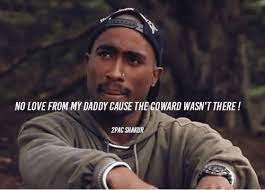
There is a lot of difficulty in tracing the origin of fatherhood as a theme in rap music. My educated guess is that the concept would not be brought up until around the early 1990s as it wasn’t until the late 1980s that rap began a lyrical metamorphosis when groups like N.W.A. and Public Enemy began exposing the struggles of the American Black man in their songs. The first instance I have found where fatherhood is closely examined as a major theme is in 2pac’s ‘Papa’z Song’ from 1993. In this song, 2pac expresses his frustration in being abandoned by his father and how the lack of a patriarch left a rift within his family that caused instability later in his life.
This tragic situation is an unfortunate reality for many black families in the U.S as census data shows how in 2019 out of a total of 15 million black families living in the U.S , 4.14 million of them were single-parent, fatherless homes. With nearly one-third of the entire population affected by this issue, it would be difficult to argue against the idea of fatherhood being a touchy subject in the black community. As rap reflects the realities of the black community, the reality of a lack of fathers directly translates into the lack of a market for people who want to hear about fathers.
In fact, I would argue that for the black community, the concept of fatherhood goes beyond ambivalence and apathy and instead skews toward feelings of repulsion. My theory is that Will Smith is the cause for such a disparity.

In 1998, Smith released “Just The Two Of Us” a sweet tribute song to his son Jaden Smith, which eventually grew to become one of his most critically successful releases peaking at #20 on the U.S Billboard top 100 chart and #1 on the U.S Billboard Hot Rap Songs chart. Most people upon hearing the song would find it to be wholesome and inoffensive and that is precisely why the song does not fit into the culture of rap. Hypermasculinity and bravado were, and to some extent still are, entrenched in the image of ‘the rapper’ and hence lines that indicate vulnerability and fragility such as lines like:
“Every time I look at you I think man, a little me Just like me, wait and see gonna be tall, Makes me laugh ’cause you got your dads ears an all”
is alien and unrelatable to most fans of rap music. Furthermore, considering how commercially successful “Just The Two Of Us” was, it became the de facto example of what fatherhood means for rappers; weakness.

Another example that supports this theory comes from Eminem’s public ‘beef’ with Ja Rule. Eminem has been very transparent about his family situation in his music and that openness manifested not only in him publicly mentioning his role as a father but also extended to him incorporating his daughter’s voice in his music such as in songs like “97’ Bonnie & Clyde” and “Kim”. So when Eminem and Ja Rule were trading verses and ‘dissin’ each other on tracks, Ja Rule viewed Eminem’s pride over being a father as a weakness in his character. So Ja Rule created the track “Loose Change” where he targeted Eminem’s daughter saying:
“Em ya claim ya mother’s a crackhead and Kim is a known slut,
so what’s Hallie gon’ be when she grows up?”
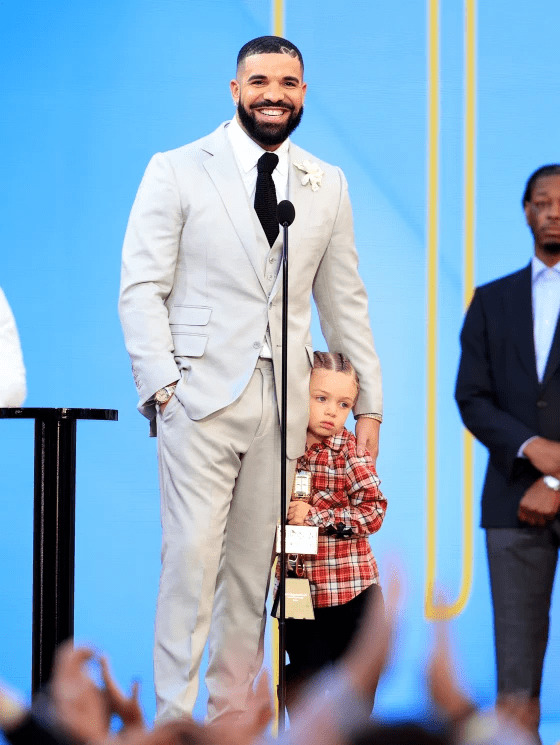
The trend of fatherhood as a weakness prevails in the current era of rap, considering it was relatively unaddressed by popular rappers in neither a negative nor positive light for years. The silence on this topic was, however, broken recently in 2018 when the poster boy for popular rap; Drake was in a public ‘beef’ with industry veteran Pusha T. After Drake released the track ‘Duppy Freestyle” explicitly addressing their public feud, Pusha T retorted with a track that most rap fans would agree decisively won and ended the fight. In “The Story of Adidon” after several cutting disses to Drake, the part that was the most shocking was the line “A baby’s involved, it’s deeper than rap, We talkin’ character, let me keep with the facts, You are hiding a child, let that boy come home. Deadbeat motherfucker, playin’ border patrol”
Setting aside the fact that such a line plays into the history of Rap’s disdain for ‘deadbeat’ fathers, the fact that Pusha T believed that exposing Drake’s failure to be a supportive father would be perceived by rap fans as a substantial weakness in Drake’s character, recontextualizes the dilemma of the absentee father in rap culture. One could ask the question “To what extent does the history of the ‘deadbeat’ father play on the modern perception of fatherhood in rap culture now?” I would argue that it has a heavy bearing on the perception of fatherhood now because otherwise Pusha T’s lyrics perhaps would not have cut as deeply as they did if fatherhood as a topic was not the elephant in the room that it is now.

This brings me back to where I originally started this exploration, that being Kendrick Lamar’s “Father Time”. This is why I believe the line “I got daddy issues. That’s on me.” has much deeper implications when viewed through the wider lens of rap culture as a whole. Culturally speaking there are a number of layers of generational trauma in the African-American community that has gone unaddressed but have integrated themselves as an unspoken taboo in the culture. With the sizable percentage of black families affected by the failings of absentee fathers, it is understandable why it would seem to be a delicate subject considering the target demographic of the music is African-American youths.
Needless to say, considering how poignant and cutting Kendrick Lamar’s simple introspective observation comes across, then maybe rap fans in general should begin to culturally interrogate ourselves. Perhaps then we can start with admitting that WE got daddy issues. That’s on us.
 Sylvia Wynter's Dream
Leave a comment