Miska G.’s response to Strasser and Coverley’s visual poem “ii – in the white of darkness”
“It was not the erasure that mattered so much as the act of trying to recover what we no longer can identify.”
M.D. Coverley, 2004
The human mind is one of the most complex and intangible concepts to exist. The human mind and further, the human memory is a vast vault of everything known and unknown that exists in the conscious and the subconscious.
Human beings are inherently fragile creatures. The mind – a concept yet to be completely explored or understood. And the memory – a delicate work of art. A tangled web of words, sounds, images, actions, emotions, and thoughts! Everything necessary to aid in the optimum function of the human body, an organic machine.
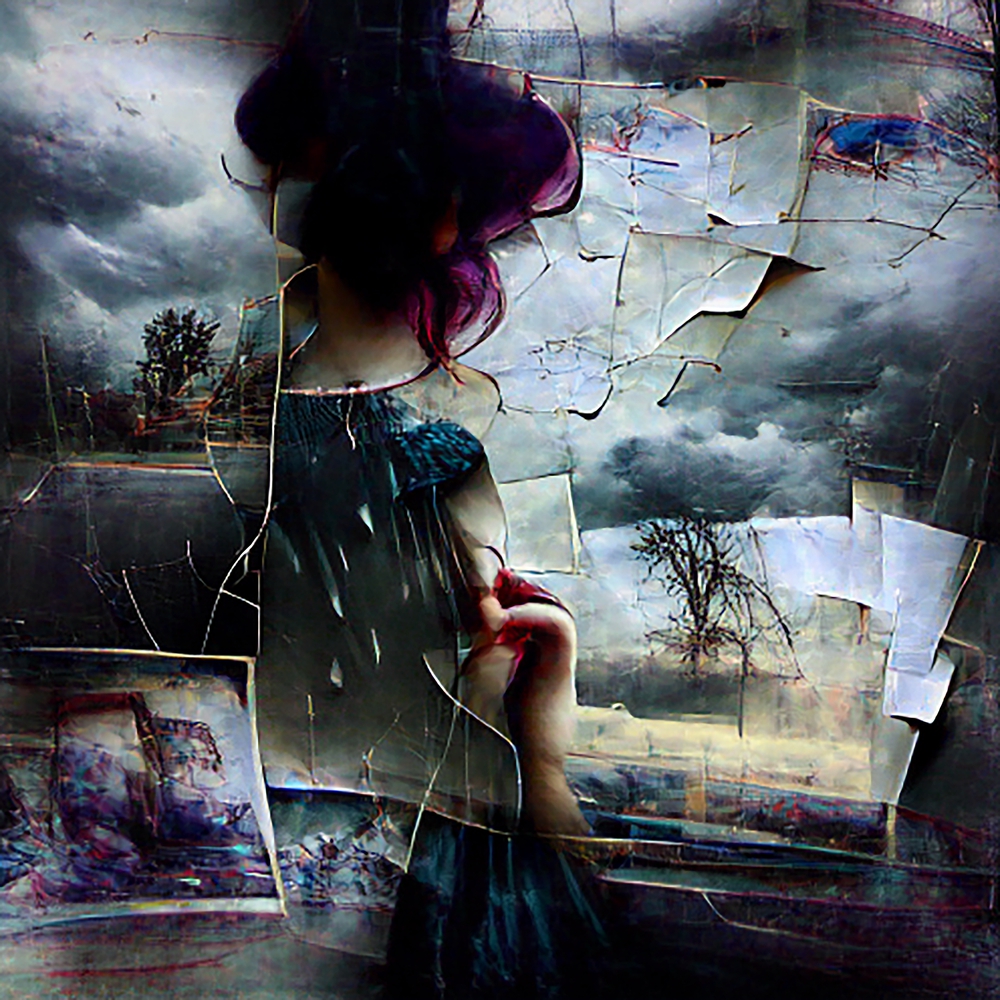
The memories that we probably don’t remember or will ever recall, begins before we enter the world. Each thing both tangible and intangible our senses, body and mind comes into contact with whether intentional or not is silently stored in a part of our mind. Either to be forgotten and slowly fade away or to remain there – imprinted forever. So vivid that every detail is like it is being experienced again.
These memories are things that are deemed inconsequential, a second thought. They are expected to be there as conditional reflexes or like a file that can be pulled up, opened, perused, closed and then locked away until needed again.
The most impactful expression from Coverley’s quote regarding the fragility of the human memory is the act of one trying to recover lost memories but can no longer recognize the memories that once belonged to oneself.
It is the struggle to recall. The uncomfortable feeling of seeing, hearing, feeling, tasting, smelling, feeling, thinking of something and only reaching the very edges of a hazy impression before it all slips away. Like water through your fingers. It will never remain in your grasp forever. Holding too tight will squeeze some away. And not holding on tight enough, will let them slip away.
 Sylvia Wynter's Dream
Leave a comment