By Natalia Downer
Blog Entry#1 12/09/2022
“Why Digital Writing Matters”

The introduction to “Why Digital Writing Matters” ties in closely with this course. It highlights and stresses digital collaborative work where students, young adults, or anyone digitally savvy, from all over the world, work together to achieve a common goal using digital spaces to reduce the boundaries caused by location. It also acknowledges that, although the world is shifting online and replacing physical jobs or ways of doing things, certain physical things cannot be replaced such as the experiences and knowledge that we gain directly from our instructors.
Initially, the thought of a non-fiction course combined with digital media – or rather, within the confines of digital media – sounded confusing. However, upon reading the article, I can see how relevant and useful the two can be. I have learnt that digital writing does not literally mean text on a screen, but that it facilitates the interconnection of external work – locally or from across the globe – with whatever text we may put on a screen. It is a way of combining multiple contributions, taking place in different mediums, to feed or develop one overarching idea. It puts a new meaning to the word collaboration and is seemingly a fresh take on group work. It has made me excited to work along with my peers to see how everything that we all bring to the drawing board and put on the table comes to fruition and becomes something that will impact not only us but perhaps even the world at large.
Blog Entry#2 18/09/2022
“Create and Celebrate or be Cast Aside?” – an Introduction

There is a very unfortunate misunderstanding – as I like to put it – that is tangled in the meaning of ‘Jamaican’. It is a misunderstanding that has been uprooting the individuality of each and every Jamaican, devaluing/ undermining the individual experience. It is a misunderstanding that has not necessarily been written in words, but it has manifested itself behind the scenes, upfront, and all around; it is known.
What is known?

In Jamaica, the Jamaican creative is known for his or her ‘Jamaican-ness’. If your short story, novel, poem, or play doesn’t include a glimpse of the Jamaican culture – (whether it be through the food, the scenery, the dress, or the language) – it is white-washed, Americanized, Europeanized, a renouncing of one’s own culture and heritage or, just downright unacceptable.
Here is a term that I am sure a majority of Jamaican creatives have heard before or have knowledge of:
O R E O
The sweet, black, chocolate cookies with the white cream in the middle?Well, yes and no.
- Yes- in the sense that the term directly relates to the appearance of the cookie,
- No- in the sense that the term refers, not to the cookie, but to a black person (or, in this sense, a Jamaican) who ‘acts White’. Black on the outside, White on the inside…just…like…an Oreo cookie.
We need to break the stigma of ‘Jamaican-ness’.
Photo by Anshuman Mohapatra: https://www.pexels.com/photo/black-round-cookies-on-white-surface-5611701/
But what does Jamaican-ness even mean?
I’d like to argue that there is no one definition. As a matter of fact, in trying to come up with a definition, I would aim to include factors such as history, location, and experience.
Take a look at the definition of ‘Jamaican’ taken from the Collins Dictionary below:

Pay close attention to the two definitions: how more or less specific and shallow the first is, and how simple but expansive the second is. The second definition, in my estimation – though very simple and unspecific – is the superior definition because it not only leaves room for things such as culture and location but – also, more importantly – experience…the individual experience.
So yes, a Jamaican is someone who “comes from Jamaica” or, to be more specific, is one who was born there or – I suppose – one who has citizenship there. And, the Jamaican is whoever that person is; it is however, they were raised, however, they choose to speak, whatever they decide to create art about or around – so long as they are ‘Jamaican’ by the ACTUAL definition of the word.
Lastly, let us not forget our motto: “Out of Many One People”. Though rinsed, let me repeat the obvious here as well: Jamaica is a melting pot of very different people with very different experiences in life who share a common history. And although this blog post merely acts as an introduction to the issue, let me conclude by saying that we cannot afford to disregard the factor that makes all Jamaicans unique. Although we are one people,
- some of us grew up speaking Patois, some standard English, some both;
- some grew up listening to Reggae and Dancehall, some to Classical music, pop, rock, alternative, or all;
- some eat ackee and saltfish, some fear the poison of the ackee, some eat jerk chicken, Chinese food, Japanese food, Indian cuisine, all, some, or none.
The point is, when it comes down to creating – whether it be song, story, or sculpture – it does not have to look or feel Jamaican to be Jamaican. This is because, to the creator, based on their own experiences living in Jamaica, or being a part of the diaspora, it looks or feels that way to them…and it is valid.

Photo by Ketut Subiyanto: https://www.pexels.com/photo/young-black-man-checking-schedule-in-notebook-while-chilling-on-street-in-downtown-4559942/
Blog Entry#3 25/09/2022
“Create and Celebrate or be Cast Aside?” – Crazy Contradictions
In the Caribbean, we celebrate when Jamaicans are published by foreign publishers; we revel in the fact that we are recognized by people who once colonized and enslaved us. Take Cyril Lionel Robert James (CLR James) for instance, a Trinidadian historian, journalist and writer.
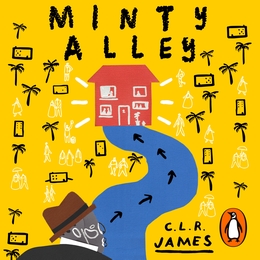
His novel Minty Alley, published in 1936, was the first book by a black Caribbean writer to be published in Britain, and this specific event in Caribbean history is still being spoken about today. It is not to say that this feat is not one worthy of being acknowledged, because it certainly is. The issue is that, while Jamaicans, the Caribbean and Black people all over the world laud the acknowledgement of Black voices by the White community, they seemingly fail to appreciate the actual voices of these Black writers.
← Photo by Penguin Random House: https://www.penguin.co.uk/books/320875/minty-alley-by-james-clr/9780241482667
This issue is very prevailent in Jamaica where voices that do not sound ‘Jamaican’ are not considered Jamaican and are therefore not published or spoken about in the country at large. Furthermore, it is important to note that this does not only take place in the broader Jamaican society but also in our professional industries – our publishing houses.
One of the main issues surrounds the fact that our Jamaican publishing houses want us to write about our Jamaican lives and experiences, and that if we choose to write about foreign places, we should add a ‘Caribbean feel’ to it. However, not everyone in Jamaica wants to write about Jamaica or wants to write with any association to the Caribbean. Some use writing as a means of escape or exploration, and it is writers like these who suffer and are drowned out by the contemporary Jamaican publishing industry.

Some Jamaican publishing houses will only publish Caribbean works, which only adds to the issue. Our own publishers, the people who are supposed to represent us and our individuality as writers, are trying their best to restrict and confine us. One such publishing house is Ian Randle Publishers who prides themselves on “publishing fine quality books on and about the Caribbean since 1991”. It is quite sad really.
It is about time that we break the mold! We are Jamaican creatives in our own right, with our own unique voices, and with our right to tell the stories that we want to tell. We deserve to have the support of our country and our people. It is so slack that some of us feel the need – or rather – feel they have no choice but to look to foreign publishers to represent us and our work. The time to act is now!
Blog Entry#4 2/10/2022
“Create and Celebrate or be Cast Aside?” – Creative Nonfiction Essay
White Blood Cells and Foreign Matter
The teacher says, Take out a notebook, or journal, or whatever you feel comfortable writing in. We’re going to do a writing sprint.
Here we go again. The dread of having to come up with something on the spot. Yes, I’m a writer, but these things don’t come that easy; inspiration isn’t all that forthcoming on a whim. And what’s worse…
I want you to write about a memorable place from your childhood.
I know for a fact that I’m more or less going to be the sole individual whose sprint doesn’t include anything relatable. My piece is going to be foreign. From what you previously told us, you want us to be truthful, that way the information should be able to flow easily because we’d be writing based on a real event. You jokingly tell us that there is no wrong answer, to stop overthinking, and to just write.
My classmate asks, Miss, can we write about a place that used to exist but doesn’t anymore?
You answer in the affirmative, stating that it is acceptable so long as it was a real place. I sit in anticipation waiting for you to give us the go-ahead to begin the five-minute sprint. Some students complain about not knowing which location to write about; some cannot decide among an array of options. But as for me…I know from the start. One place pops into my mind, and as much as I try my best to think of somewhere else…McDonald’s remains at the forefront of my core, meaningful memories. Of all the places in Jamaica that I could have had sweet memories attached to, of all the places in Jamaica that I could have written about, McDonald’s – a foreign conglomerate – was real to me.
Begin.
I write with ease, the words flowing like the moving pictures in my mind. I see the drive-thru, I write about the drive-thru; I smell the maple syrup on the perfectly browned pancakes, I write about the smell of the maple syrup on the perfectly browned pancakes. I write about McDonald’s – a place I identify with, a place that I ate at almost every day, a place whose food my tongue was accustomed to.
You say, Times up! Who would like to share?
I hesitate. I do in fact want to share because I have a beautifully written piece filled with descriptions, and detailed enough to make anyone imagine…to make anyone remember. But will they remember? Did they experience McDonald’s as I had? Did they experience it at all? I shift my mouse from the ‘unmute’ button and hold my tongue. I remain safe behind a screen.
Come on guys, don’t let me have to pick one of you. This is a judgement-free zone.
I believe that it is, but something in me tells me that I should feel ashamed of what I’ve written. I let a few classmates go first and, of course, one mentions her grandmother’s house in the country. She recalls being woken up early early in the summertime when children should get to sleep late. Almost everyone chimes in saying they experienced this too…I don’t relate. I end up sharing my piece anyway, and the teacher applauds my details and descriptions.
A classmate types in the chat, You must have travelled a lot.
Did she forget that McDonald’s once existed in Jamaica? I correct her telling her I’ve never stepped foot on a plane or a cruise ship. Another classmate suddenly remembers that there was in fact a McDonald’s in Jamaica. I get my hopes up. Nothing more is said, and we move on to the next student’s piece. I think to myself, if it were acceptable to write about foreign things, more people would know, and those who knew wouldn’t be afraid to tell.
Blog Entry#5 17/10/2022
“Create and Celebrate or be Cast Aside?” – Godforsaken Globalization

There are certain questions that must be considered when investigating the reason behind why Jamaican creatives are seemingly being forced to make their writing conform to local restrictions. Some include:
- How does globalization affect our creations?
- Who is trying to keep our writing local?
- Why are they trying to keep our writing local when we are living in a global era?
So, first of all, what is globalization?
According to the Collin’s Dictionary, it is “the expansion of many businesses into markets throughout the world, marked by an increase in international investment, the proliferation of large multinational corporations, worldwide economic integration, etc.” There are also about three types of globalization which can be considered, namely:
- Political,
- Economical, and
- Cultural
the third being the most impactful to this conversation.
But…how does globalization factor into the publication industry?
Photo by Ravi Kant: https://www.pexels.com/photo/word-define-on-spelling-dictionary-page-5929346/
There is a conversation going around concerning the issue of the modernization of cultures – which came as a result of globalization – destroying tradition. One source specifically tackles this conversation paying close attention to novels written around the globe. This thought can very much be seen echoing within the Jamaican publishing houses, as well as amongst our people. This also happens to give somewhat of an answer to the other two questions.
So, who is trying to keep our stories local? Our publishers. And why are they trying to do this? Because they would like to uphold tradition…or so it seems.
||WARNING||
The following argument is SOLELY speculation-based .

Let us, once again, take a look at Ian Randle Publishers, for example. This publishing house, founded by Ian Randle, began in 1991 and was run by Randle himself for around 40 years – give or take – before his daughter Christine took over management sometime in the 2000’s. Now, the culture of Jamaica has changed in the past 40+ years. However, as Ian Randle Publishing is known to have been responsible for decreasing the Caribbean’s dependency on its colonizers (the UK,) in regards to getting work (such as history, culture, and sports-related texts) published, why would Randle want to break this tradition, today, for the modern Jamaica?
With the establishment of his very own Caribbean-based publishing house, why should he allow Caribbean writers…Jamaicans…to write ‘Eurocentric,’ or related, books and have them published in his establishment that aimed to give Jamaicans colonial independence in the publishing industry?
Let us also consider his daughter, Christine Randle. Yes, she is younger than he is, but that doesn’t mean that she is any more ‘modern’ than he is.
Maybe this is all too confusing.
What I am trying to say is that, perhaps – especially because of her father’s legacy – she has also conformed to his way of thinking, his traditions, and his beliefs. It doesn’t help that her profession originally lied in the legal field. With all of this pressure (maybe) and tradition that she grew up around, she is only doing what she believes is right which is to protect and carry on the vision that Ian had for Ian Randle Publishers. We cannot then blame her, can we? What if we were in her position?
BUT, regardless of tradition and trying to ‘please Pops’, she, just like anyone else in the industry, has a responsibility to advocate for Caribbean voices, Jamaican voices, to be heard, to be represented…in all the shapes, colours, and accents that they come in. Do you not agree?
Here are some other notable links to consider:
Globalization of Culture Through the Media
The Novel and the Globalization of Culture
Blog Entry#6 22/10/2022
“Create and Celebrate or be Cast Aside?” – Modeled Writing Task#2 – Natalia D.
<Program>: Jamaican/Caribbean Short Story Competition [sic] [System Failure]
Thank you for your interest in the [REDACTED] Creative Writing Short Story Competition; please be advised that this competition is only open to students currently registered with the University of the West Indies, Mona campus, who are in good financial standing with the university; please be advised that students from the other campuses will not be permitted to enter; please be advised that this competition has no age limit; when registering, please ensure that you include your full name, address, telephone number, and your student identification number associated with the university.
Good Morning,
I would like to join the Short Story Competition.
Name: xxxxxxx xxxxxx
Telephone number: 876-xxxx-xxxx
Address: xx xxxxxx xxxxxx xxxxx, xxxxxxxx x
ID: xxxxxxxxx
Kind regards,
xxxxxxx xxxxxx
Thank you for registering for the [REDACTED] Creative Writing Short Story Competition; please note that the submission of your story directly equates to your acceptance of the terms and conditions; please heed the requirements for entering and please take note of all advice given: please attend the scheduled creative writing short story workshop; a very valuable speaker – man with the appearance of the colonizers – <winner of the Commonwealth Short Story Prize competition for the Caribbean region> – man with the accent of the colonizers – will be leading the discussion; please note that if you are unable to attend, you will not be penalized; please make an effort to read at least one or two of the short stories that were previously published on our website; please note that when sending in your entry, do not include your name; only include the story’s title, and place your student identification number on every page; please note that what you send in will be your final draft; please note the following before sending in your draft: <we would expect that some aspect of Jamaican/Caribbean life would be at the heart of the story>; the word limit is 2000 words minimum and 5000 words maximum; we do not consider the title a part of the word count; do not include your name; the [REDACTED] Creative Writing Short Story Competition will welcome entries as of Wednesday, November 25, 2020; the [REDACTED] Creative Writing Short Story Competition will cease to accept entries as of Sunday, December 20, 2020; <we would expect that some aspect of Jamaican/Caribbean life would be at the heart of the story>; please note that all winning entries will be announced as of early February 2021; <Just a quick reminder that the closing date for the submission of enties [sic] to the Creative Writing Competition is Sunday December 20, 2020>; please note that all submissions should be made in English; please be advised that this competition has no age limit; [we would expect that some aspect of Jamaican/Caribbean life would be at the heart of the story]; please heed the requirements for entering and please take note of all advice given: [we would expect that some aspect of Jamaican/Caribbean life would be at the heart of the story]; please note that the judges’ decision is final; <we would expect that some aspect of Jamaican/Caribbean life would be at the heart of the story>; Thank you for registering for the [REDACTED] Creative Writing Short Story Competition; please note that the $ubm1s$10n of your story directly equates to your @c(ept@n(e of the terms and conditions.
Attached is the short story entry for:
Name: xxxxxxx xxxxxx
Address: xx xxxxxx xxxxxx xxxxx, xxxxxxxx x
Title of Short Story: Midnight Exhibitions The Heat of the Island
UWI Mona Identification Number: xxxxxxxxx
Telephone Number: 876-xxxx-xxxx
Faculty: Humanities and Education
Programme: Writing, Literature & Publishing
Thank you for this opportunity.
Best regards,
xxxxxxx xxxxxx
Good Day,
Received with thanks.
Please note that <worldwide copyright of each entry remains with the author, but the [REDACTED] will have unrestricted right to publish the winner and short-listed stories in any format, including on the Centre’s social media pages>; also note that <only winners and highly commended runners up will be notified directly. Other entrants will receive a general acknowledgement of participation.>
All the very best.
[REDACTED]
Blog Entry#7 29/10/2022
“Create and Celebrate or be Cast Aside?” – TikTok Modeled Task
“What Makes a Caribbean Writer?”
Blog Entry#8 6/11/2022
“Create and Celebrate or be Cast Aside?” – Modeled Task: Interview
Transcription of 5 minute excerpt
(6:57 – 12:28) below:
Natalia Downer (Interviewer): Did you think about having your book published here in Jamaica? Or elsewhere?
Stephanie Downer (Interviewee): Hm. I was thinking about [nervous chuckling] — having it published elsewhere I guess.
[Combined laughter]
And do you have a reason for that?
No, to be honest I never really thought about it fully — ahm — [a short burst of laughter] I guess it could be published here.
Are you aware of the types of books that they — that we publish here in Jamaica?
Well, well — why? Ok let me-let me ahm — reverse. Ah, it would probably be — better for me if it’s published elsewhere because it’s — my book is not going to be judged — ahm — my book is not going to be a — just a ‘Jamaicanized’ book; It’s going to be dealing with, like I seh, mostly religious issues which are here…but…sometimes our West Indian Literature books ha- they-they might want a particular type of book dealing with — more —political and — ahm — [kisses teeth] what’s the word, what’s the word? Ahm, social issues and whatever that — that are very, you know — common in the Caribbean and so…yes religion is, I mean part of that, but it might not get the, sort of — they mightn’t want to — maybe — publish it, I don’t know. So, I figure that it might not fit the — requirements of what would be accepted here, I don’t know, but I just figure I’d have a better chance, if it is — published elsewhere.
Wow, that’s food for thought. Indeed, indeed. So, are you aware of the issues surrounding the expectations of Jamaican or Caribbean writers? It sounds like you do. I suppose you touched on it awhile ago so we can skip over that question. So, I want you to do this for me. Can you tell me how you define a Jamaican writer? How do you define a Jamaican writer? Is it someone that lives in Jamaica and writes?
I figure a Jamaican writer would be somebody who is born in Jamaica, has grown up in Jamaica, has spent most of their life in Jamaica — or at least somebody who, even if they haven’t spent most of their life here, they have — Jamaican —
Lineage? Heritage?
Right. And are exposed to, you know, our culture and — what happens here. So, in other words, they’d have knowledge — enough, a lot — knowledge about our country and our culture and — stuff like that.
And wha — what do you think the content of a Jamaican writer would be about? Do you think it has to be specific to Jamaica and shared experiences etcetera, or?
I don’t think so. I don’t think, I don’t think just because you are a Jamaican writer or a Caribbean writer that you must be restricted to only writing West Indian Literature.
I agree with that.
I think, I mean, we should be able to write about — just about anything we want to write about. It just so happens that we are from Jamaica. So, if you want to say that, ahm, Jamaica, like, let’s say you do very well and whatever. Yes Jamaica will get the — you know, a Jamaican writer did this. But, I don’t think that just because we are from the Caribbean or we from a particular country you–we have to be restricted to just writing about issues and s– — ahm — stories about that country or — that — region.
Region. [light chuckle] I wholly agree with you. So, I-I kinda want to revisit a question from earlier, but with a little twist. Do you think that any of the fear of telling me what your upcoming work is about has anything to do with the expectations placed on you as a Jamaican writer? Or is it — some other reason? [light laughter] Is it just that you’re not ready to share it yet? Or, you think that has something to do with it?
Well, I — nnnnnno, just not ready to share it yet. [Light laughter]
Ok.
“I’m heading in a particular direction but I could change, you know, so I don’t want to — get into — the nitty gritty of it yet.
That’s true, that’s true. I completely understand. So, I have one more question for you Mrs. Downer. Is there anything you’d like to say to the Jamaican writers who wish to be celebrated for deciding to write about non conventionally Jamaican things, those who try to break the mold?
I’d say go for it. The sky’s the limit, don’t be restricted in what you want to write. Write what you — want to write about, write how you feel. Whatever. Don’t be restricted to a — country, a region, a culture.
Amen. Here, here to that. Short, simple, sweet — perfect answer. Once again Mrs. Downer, than you so much for agreeing to do this interview with me. it was such a pleasure having you here, and I can’t wait to read your published book one day.
Well, I-I thank you so much for having me for this interview, and I certainly hope that my book will [short burst of laughter] — will appeal to you, and that it will — make it, you know? Out there.
I’m sure it will. Thanks again. Goodbye everyone, and thanks for listening.
Blog Entry#9 11/13/2022
“Create and Celebrate or be Cast Aside?” – List of Caribbean/Open Creative Writing Competitions (Now & Then)
Non-Restrictive Writing Competitions (Past & Present)
| Deadline | Competition | Link | Status |
| May 25, 2022 | Caribbean Endemic Bird Festival (CEBF) competition | https://www.birdscaribbean.org/2022/04/calling-all-caribbean-nationals-we-are-hosting-a-story-poetry-competition/ | Closed |
| February 15, 2022 | Caribbean Magazine Plus (CMP) Short Story Contest | http://www.caribmagplus.com/short-story-contest-eligibility-rules/ | Closed |
| January 31, 2023 | WOW! Women On Writing Creative Nonfiction Essay Contest | https://www.wow-womenonwriting.com/contest.php#EssayContest | Ongoing |
| February 28, 2023 | Poetry competition for The Plaza Prizes | https://theplazaprizes.com/competition/poetry/ | Ongoing |
| September 24, 2022 | Booksie 2022 Short Story Competition | https://theplazaprizes.com/competition/sudden-fiction/ | Closed |
Restrictive Writing Competitions (Past & Present)
| Deadline | Competition | Link | Status |
| March 31, 2022 | Jamaica Creative Writing Competition | https://www.birdscaribbean.org/2022/04/calling-all-caribbean-nationals-we-are-hosting-a-story-poetry-competition/ | Closed |
| December 20, 2020 | The PSCCA Short Story Competition | https://www.instagram.com/p/CHie9zchH4S/ | Closed |
| January 31, 2023 | The PSCCA Playwriting Competition | https://www.instagram.com/p/CHie5OUhCsl/ | Closed |
| December 31, 2022 | The Caribbean Writer (TCW) | https://www.thecaribbeanwriter.org/2022/02/05/accepting-submissions-for-volume-37/ | Ongoing |
| February 18, 2022 | CPEA Short Story Competition | https://www.cxc.org/examinations/cpea/cpea-short-story-competition-rules/ Flyer: https://www.cxc.org/wp-content/uploads/2018/11/CPEA-2021-final.jpg | Closed |
Blog Entry#9 11/20/2022

 Sylvia Wynter's Dream
Leave a comment